
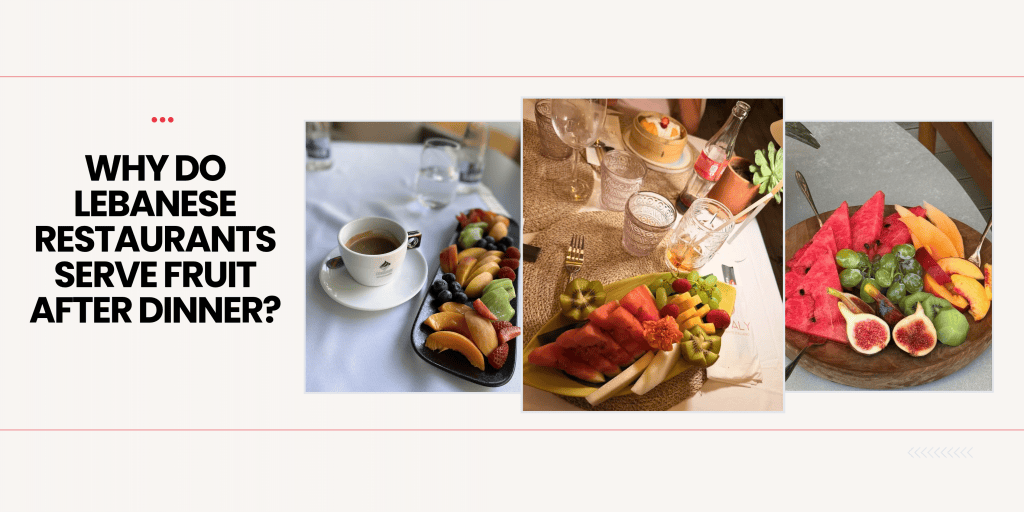
In many Lebanese restaurants, the meal does not always end with cake, ice cream, or a plated dessert.
Instead, a large platter of fruit arrives. Watermelon in summer. Melon. Grapes. Apples. Figs. Oranges. Cherries. Sometimes whatever happens to be best that season.
For many Lebanese diners, this feels completely normal. But why did fruit become such a familiar ending to the meal?
The answer sits somewhere between agriculture, seasonality, hospitality, and an older understanding of what dessert was supposed to be.
Before Dessert Became a Course
In traditional Lebanese dining, sweets were not always the automatic final act of a meal.
Fresh fruit often played that role instead.
Descriptions of Lebanese food culture repeatedly note that seasonal fruit was commonly served at the end of a meal,
while pastries and richer sweets were more closely associated with coffee, special occasions, celebrations, or moments outside the main meal.
After a long table of mezze, grilled meats, bread, salads, and shared plates, something fresh offered a very different kind of finish.
Not another heavy dish.
Not another rich sauce.
Just fruit.
And in Lebanon, there was plenty of it.
A Country Built Around the Seasons
Lebanon’s geography helped make fruit a natural part of the table.
Different regions and elevations support a wide variety of produce, and seasonal fruits have long been deeply connected to everyday eating.
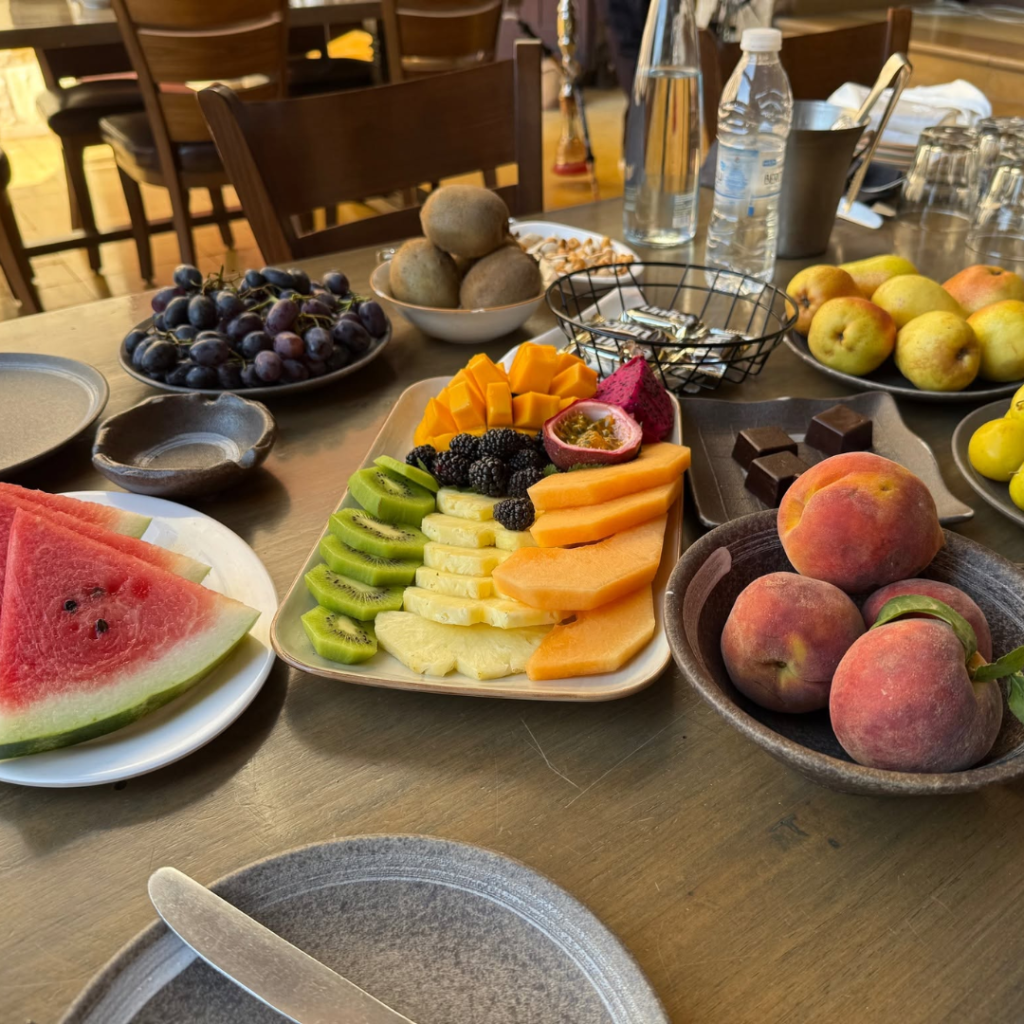
Apples, grapes, figs, citrus fruits, cherries, melons, persimmons, and other fruits regularly appear in descriptions of Lebanese meals and after-dinner traditions.
Older descriptions of Beirut restaurants also capture how visible that relationship once was.
In one account of a Beirut restaurant, guests entered past large displays of seasonal fruit — mangoes, pomegranates, grapes, figs, and others — before fresh fruit later appeared as dessert. The fruit platter was therefore not simply decoration.
It reflected what was available, what was fresh, and what the season had produced.
That is one reason the platter could change throughout the year while the ritual itself remained familiar.
Hospitality Meant the Table Was Never Really Finished
There is also a distinctly Lebanese idea behind the gesture. A generous table rarely ends abruptly.
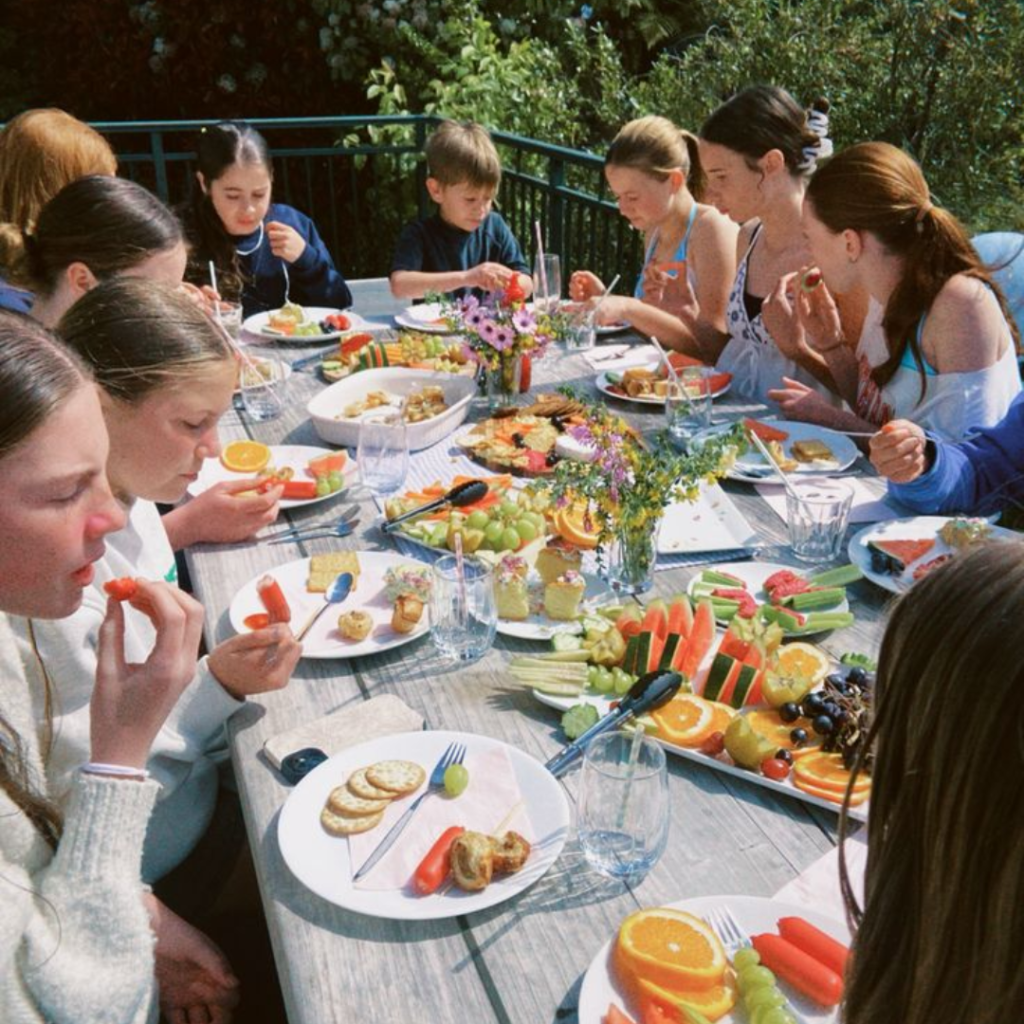
Food continues to arrive. Coffee appears. Someone brings something sweet. Someone cuts fruit. The guest is encouraged to stay. In that context, a fruit platter becomes more than dessert. It becomes an extension of hospitality.
The meal may technically be over, but the gathering is not.
Fruit works especially well for that role because it is easy to share. It can sit in the middle of the table, be eaten slowly, and stretch the conversation without creating the feeling of beginning another full course.
In that sense, the platter says something familiar:
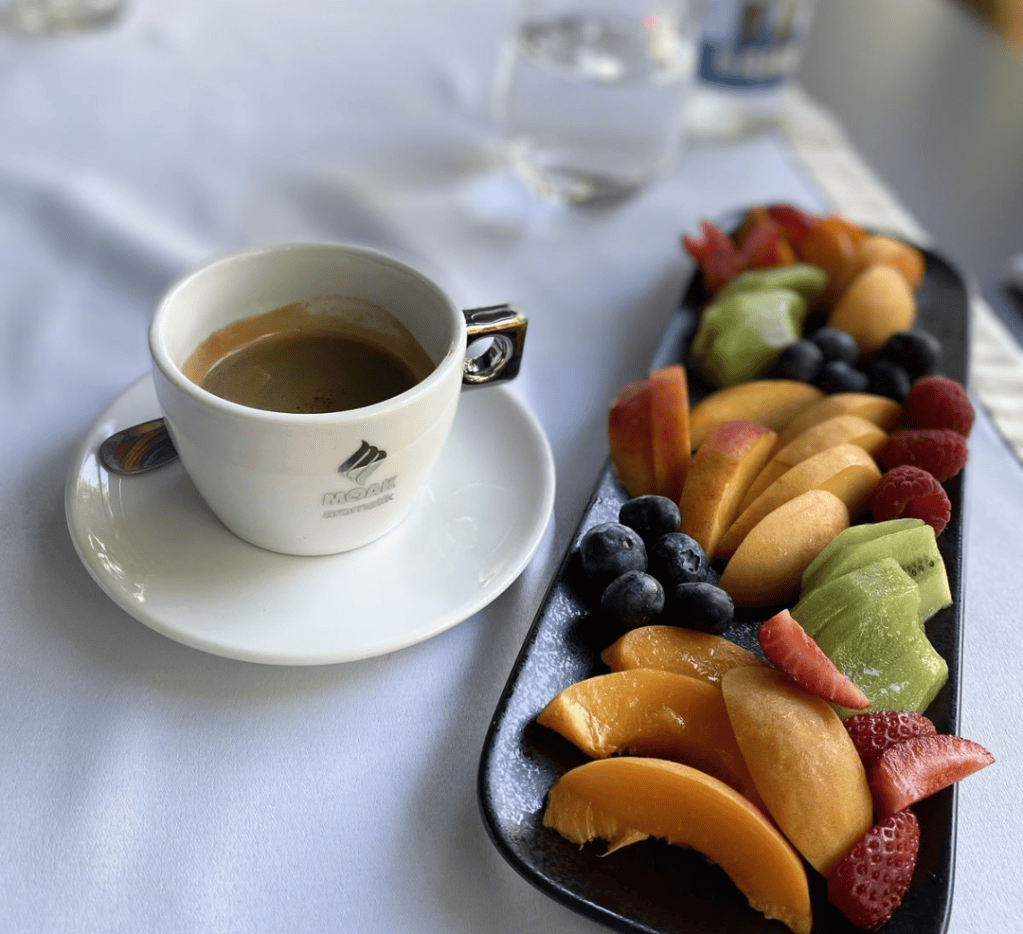
There is still something on the table for you. Stay a little longer.
Why Fruit Felt Like the Right Ending
After a substantial Lebanese meal, fresh fruit also offers contrast. A slice of cold watermelon after grilled meat and mezze feels very different from a syrup-soaked pastry. Citrus brings acidity. Melon brings water and freshness. Grapes, figs, and apples provide sweetness without necessarily feeling like another heavy course.

It would be too simple to claim that Lebanese restaurants traditionally served fruit specifically because it “helps digestion.” Cultural food habits rarely have one scientific explanation.
What is clearer is that fruit offered a fresh, seasonal, relatively light ending to meals that could already be long and abundant.
And over time, that combination of practicality and pleasure became part of the dining rhythm.
From Tradition to Restaurant Ritual
As Lebanese dining moved from the home into restaurants, many of the habits of the family table moved with it.
The shared mezze. The bread baskets. The coffee. And, in many establishments, the fruit platter.
What began as part of domestic hospitality became recognizable restaurant service.
For generations of diners, seeing watermelon, melon, apples, or grapes arrive after lunch or dinner became almost expected in traditional Lebanese restaurants.
Today, the habit is less universal.
Modern restaurants may end meals with plated desserts, contemporary pastry programs, or simply the bill.
But in many traditional establishments, especially those built around long lunches, large family tables, or classic Lebanese service, the fruit platter still survives.
And that may be why it feels so familiar.
It is not simply dessert.
It is a small piece of an older style of hospitality — one in which the end of the meal was never really about ending the evening.
Sometimes, it was simply another excuse to keep the table going.
Swanky Tip 🍉
Fruit at the end of a Lebanese meal isn’t just dessert, it’s part of the rhythm of hospitality. Take your time with it; the platter often means the meal is ending, but the gathering isn’t.

