
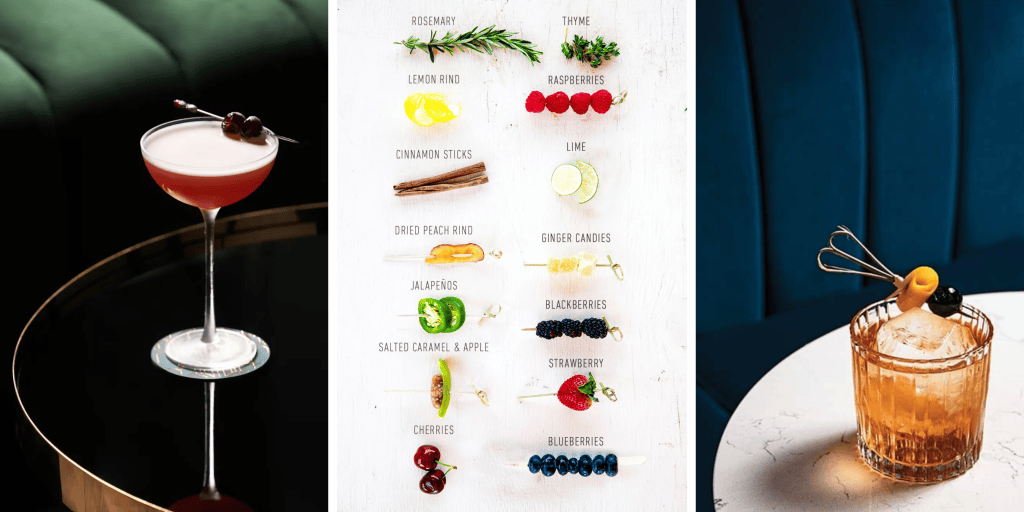
An orange peel on an Old Fashioned. An olive in a Martini. A cherry resting at the bottom of a Manhattan. A sprig of mint rising above a Julep.
We are so used to seeing garnishes on cocktails that they almost seem mandatory. But who decided a drink needed one in the first place?
The answer is less about decoration than you might think.
Cocktail garnishes developed alongside modern bartending, and from the beginning they were used not only to make drinks look better, but also to change the way they smelled, tasted, and felt.
Garnishes Were Part of Cocktail Culture Early On
By the mid-19th century, bartenders were already paying close attention to how drinks looked. Jerry Thomas, whose 1862 Bartender’s Guide helped professionalize American bartending, included drinks decorated with fruit, berries, mint, citrus peel, and sugar rims. In his instructions for the Cobbler, he wrote that ornamenting the glass was necessary to make the drink appealing “to the eye, as well as to the palate.”
The Brandy Crusta, created earlier in New Orleans and published in Thomas’s book, went even further: the glass was rimmed with sugar and lined with a long strip of lemon peel.
So garnishing was never purely a modern Instagram-era invention.
Presentation has been part of cocktail culture for well over a century. But the best garnishes do more than make a drink photogenic
Some Garnishes Actually Change the Drink
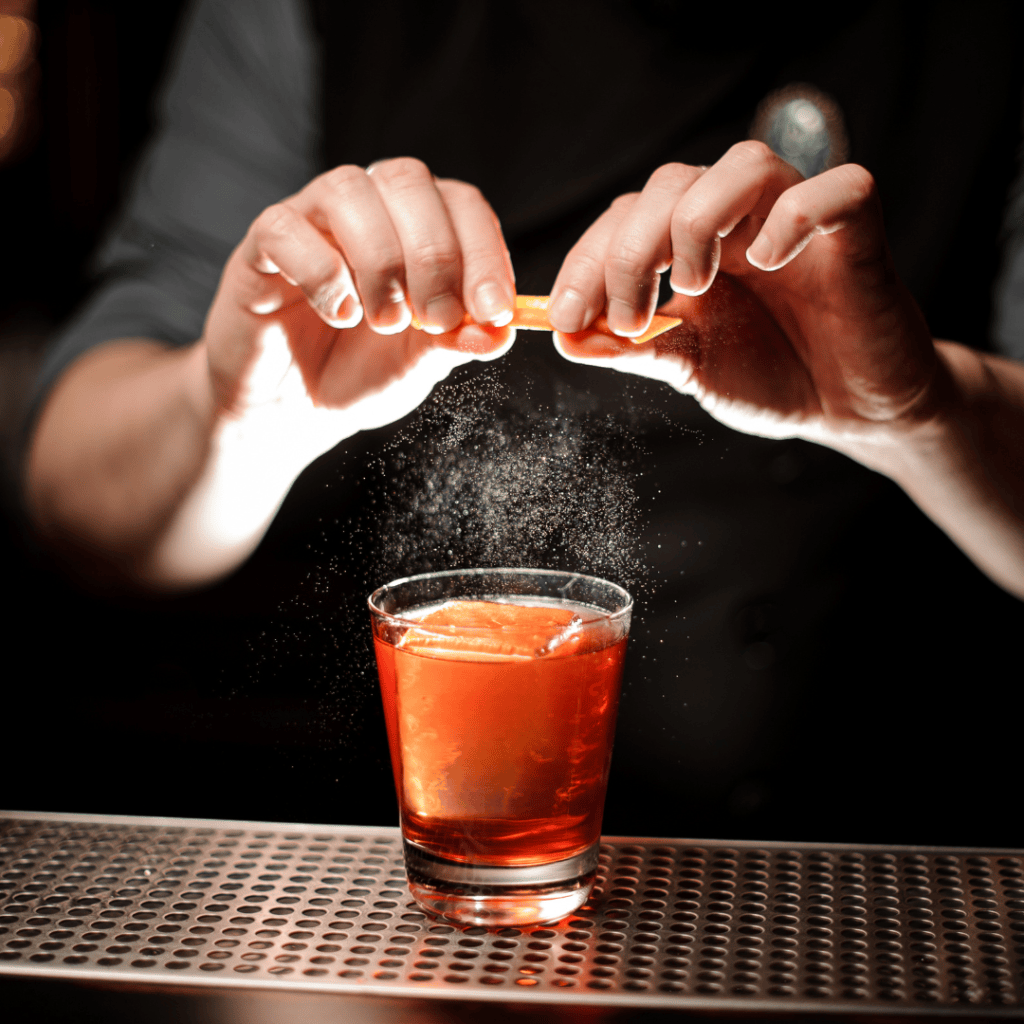
Take the orange peel on an Old Fashioned. When a bartender twists or “expresses” the peel over the glass, tiny droplets of aromatic citrus oil are released onto the surface. Those oils reach your nose as you bring the drink toward your mouth, changing the way you experience the cocktail before you even taste it.
That matters because flavor is not created by taste alone.
Our perception of flavor combines taste, aroma, temperature, texture, and other sensory signals. Without smell, foods and drinks can seem dramatically less flavorful.
This is why a garnish sitting several centimeters above the liquid can still affect the drinking experience.
Mint works the same way.
A sprig placed near the top of a drink releases aroma every time the glass approaches your face. The garnish is technically outside the cocktail. But your nose makes it part of the cocktail.
Olives, Cherries and the Garnishes You Can Eat
Other garnishes contribute differently.
An olive in a Martini brings saltiness and, depending on how the drink is made, can influence the surrounding liquid through its brine.
A lemon twist adds brightness and aroma. A cocktail onion transforms a Martini-style drink into a Gibson.
And a cherry in a Manhattan adds a small final note of sweetness at the end of the drink.
Interestingly, these choices have changed with fashion.
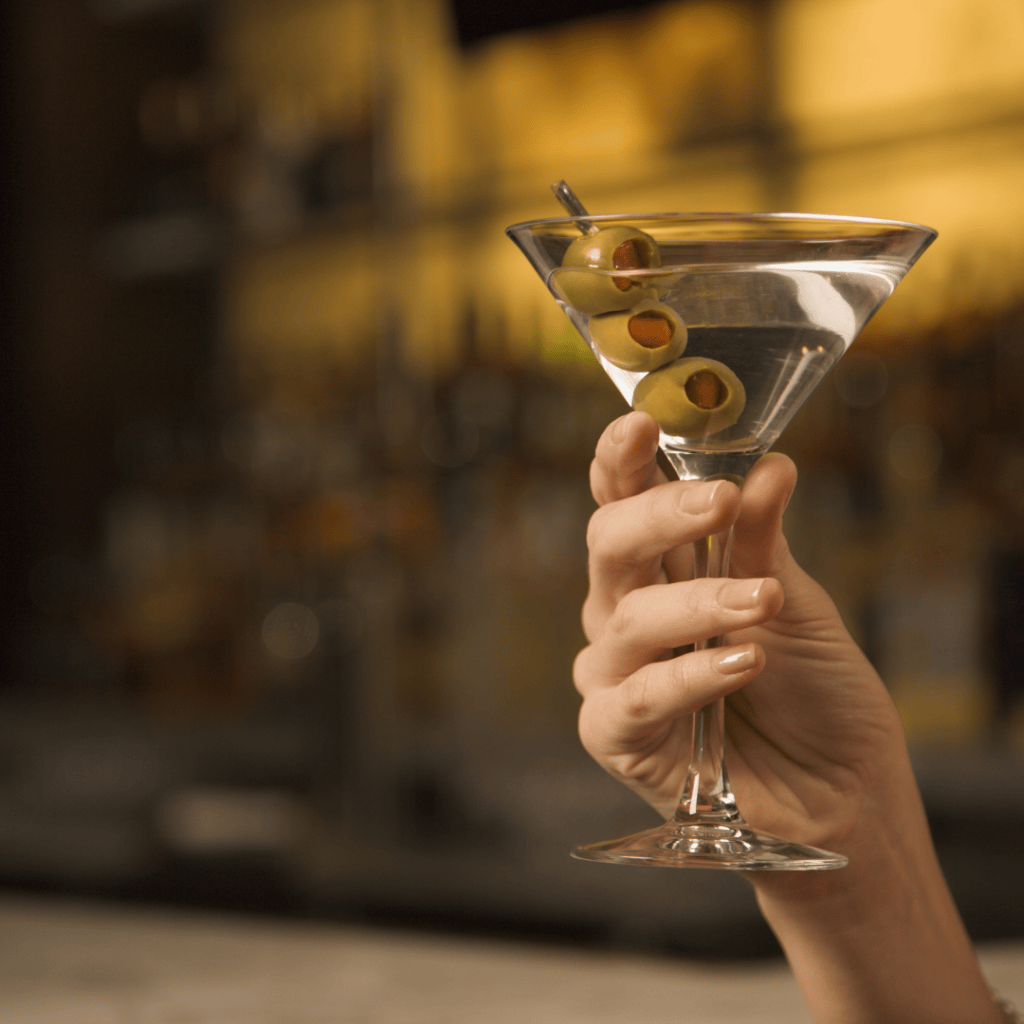
Early Martini recipes used cherries, lemon twists, and olives at different times. By the late 1890s, olives were becoming fashionable as cocktails became drier, while cherries were increasingly associated with sweeter styles.
So even something as familiar as the Martini olive is partly the result of changing drinking tastes. The garnish became part flavor, part identity.
Today, seeing an olive in a V-shaped glass tells you “Martini” before you even take a sip.
When Garnish Becomes Theatre
Then there are garnishes whose main purpose is visual.
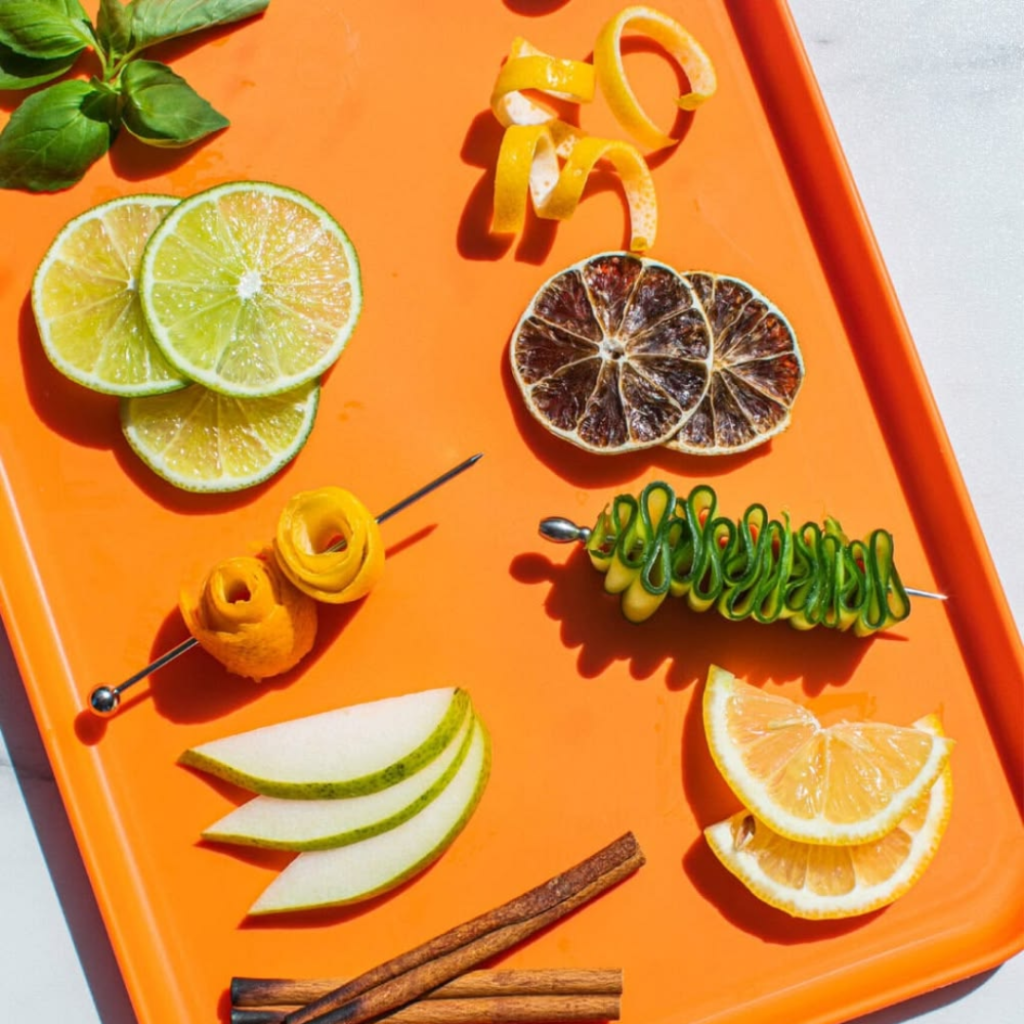
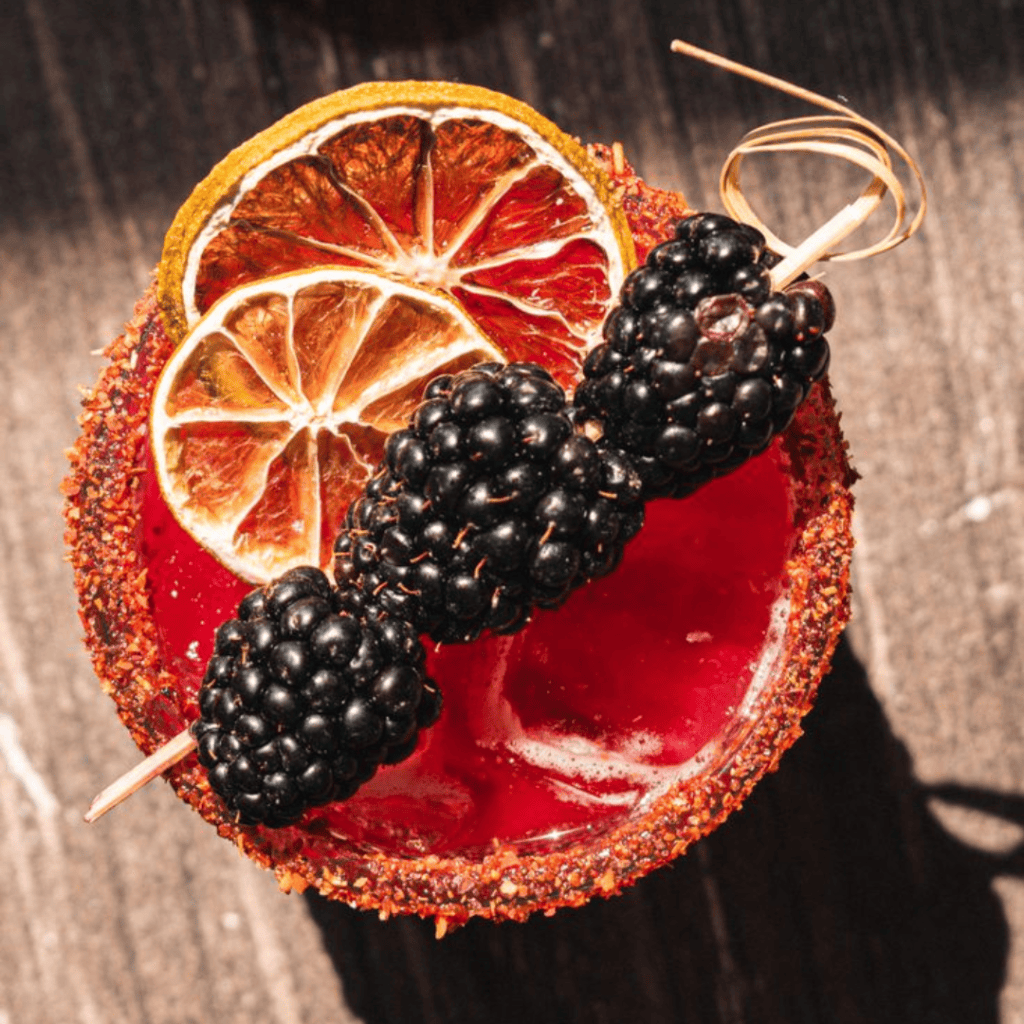
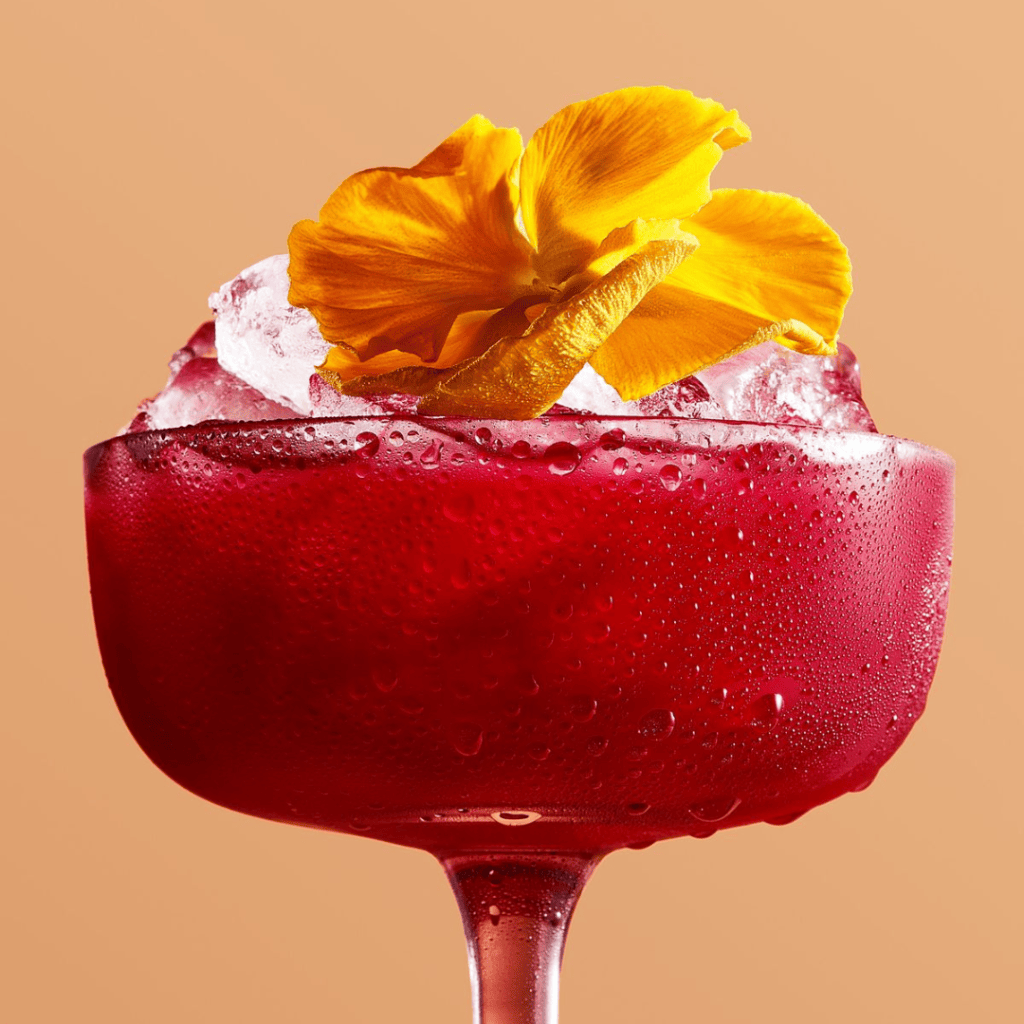
Edible flowers. Dehydrated citrus wheels. Smoke-filled bubbles. Tiny clothespins. Miniature objects balanced across the glass.
Some can add aroma or flavor. Others exist mostly because they look good. And there is nothing inherently wrong with that.
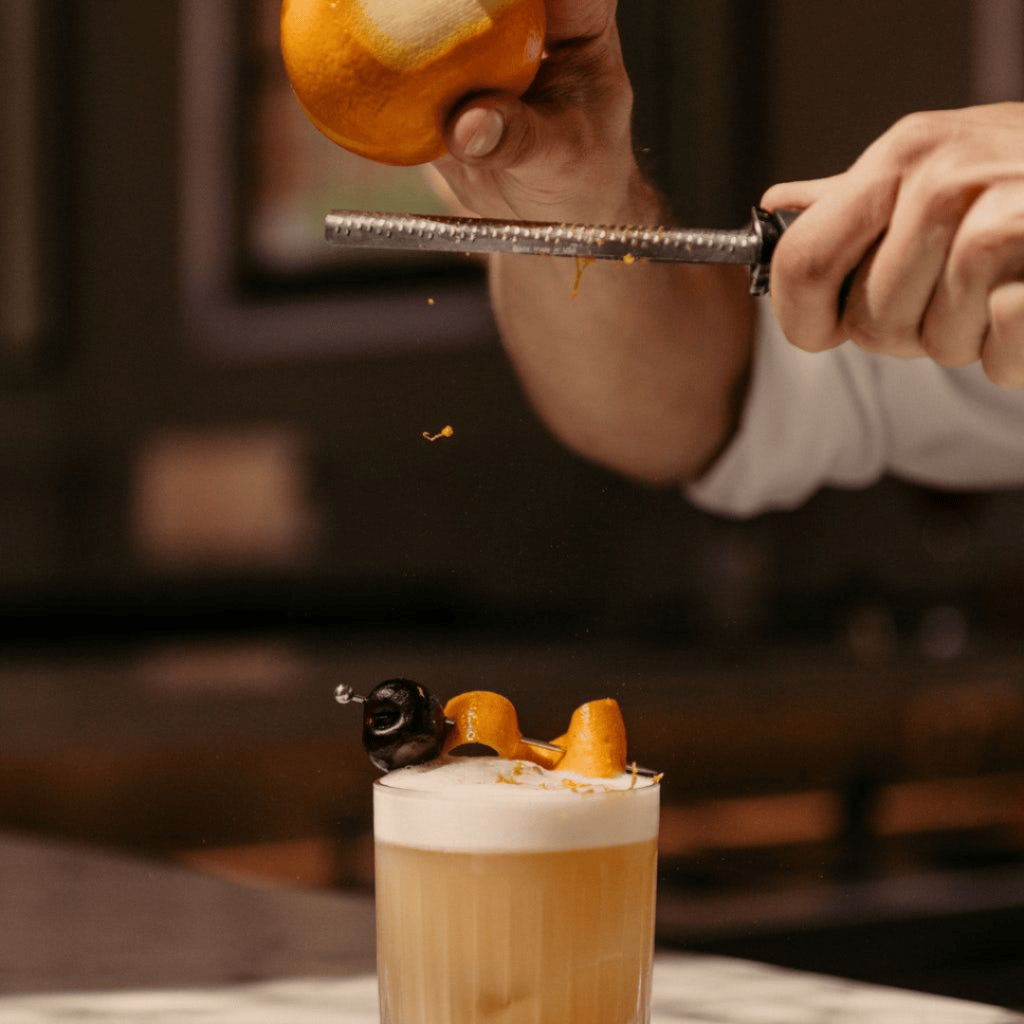
Drinking has always included an element of theatre. A beautiful cocktail creates anticipation before the first sip, and presentation can become part of the experience.
The problem comes when the garnish starts fighting the drink.
A garnish that blocks the glass, overwhelms the aroma, drips everywhere, or has no connection to the cocktail can quickly become more distraction than enhancement.
Experienced bartenders often come back to a simple principle:
The garnish should earn its place.
It can improve aroma.
Add flavor.
Create contrast.
Communicate what is inside the drink.
Or simply make the cocktail beautiful.
But ideally, there should be a reason.
The Garnish Is the Last Ingredient
A cocktail garnish is usually the final thing the bartender adds. But that does not make it an afterthought.
Sometimes it is the first thing the guest smells. Sometimes it provides the last bite. Sometimes it tells you what kind of drink is sitting in front of you before you have tasted anything. And sometimes, yes, it is simply there because the cocktail looks better with it.
That is part of the fun too. The difference is intention.
A good garnish does not just sit on top of a cocktail. It completes the idea behind it.
Because the best garnish is not necessarily the biggest, most complicated, or most Instagrammable one.
Sometimes it is nothing more than a small piece of orange peel, releasing a few drops of oil that completely change what happens when the glass reaches your nose.
Swanky Tip 🍸
Before removing the garnish, notice what it’s doing. A twist of citrus, a sprig of mint, or an olive may be adding aroma, flavor, or identity to the drink not just decoration.

