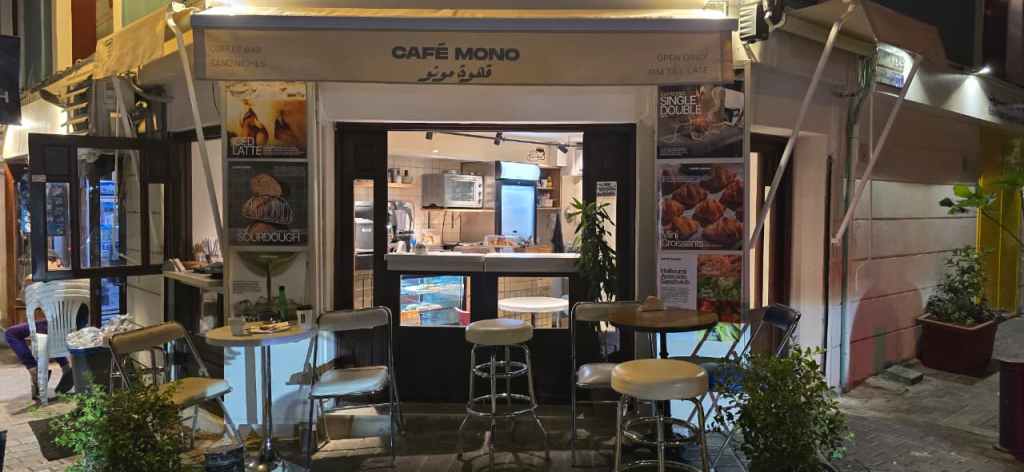
Some cafés begin with a concept. Others begin with a memory.
For Jaafar, Café Mono began long before there was a sign above the door. It started in restaurant visits with his father, in years spent moving through kitchens and dining rooms, and in a quiet ambition that stayed with him as his career unfolded.
What eventually became Café Mono was not a sudden idea.
It was something that had been building for almost 15 years.
Before the Café, There Was the Industry
Jaafar’s earliest connection to hospitality came through his father, who made tables, chairs, and wooden furnishings for restaurants. He would join him on visits to different venues, watching spaces take shape and seeing the hospitality world from behind the scenes.
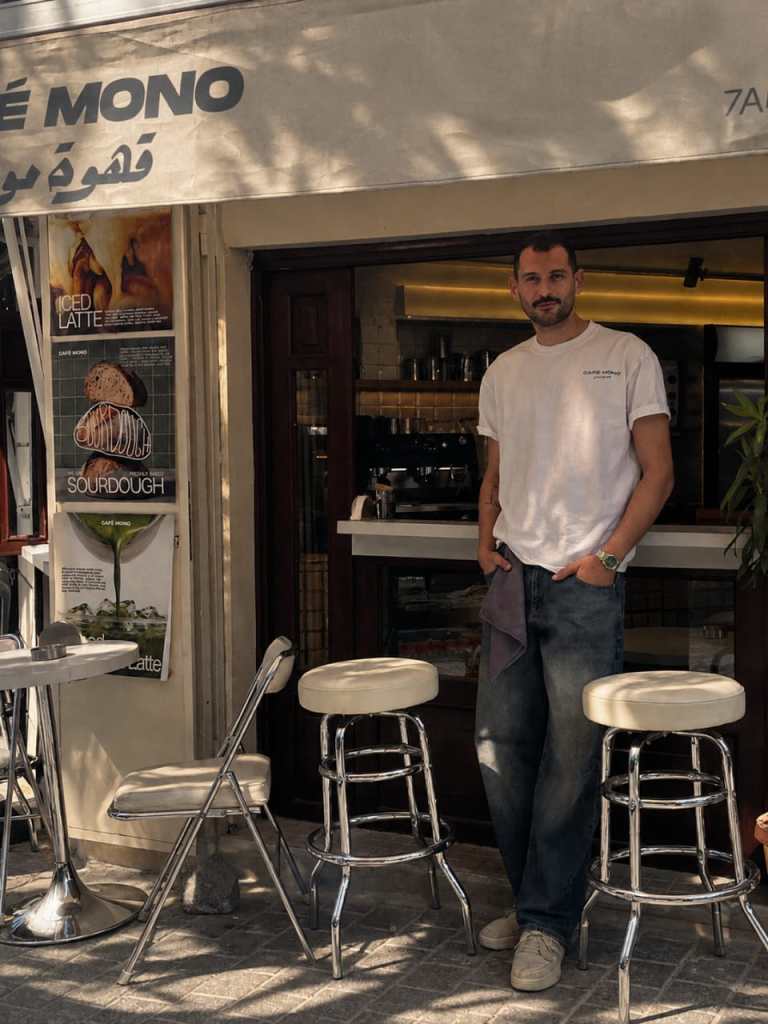
Those visits left an impression.
At the time, Jaafar was studying theatre. His future seemed to be heading in another direction. But around the age of 17, he made a choice that would quietly redefine his path: he stepped into hospitality.
His family did not immediately agree with the decision.
But he stayed with it.
What began as a young man’s curiosity gradually became a career.
Learning the Business, One Role at a Time
Jaafar’s first real step into the industry was in a kitchen on Abdel Wahab Street.
From there, the journey expanded.
He moved into service, restaurant operations, and management, gaining experience from different sides of the business instead of seeing hospitality through only one role.
That matters. Because hospitality is rarely learned from a manual.
It is learned through pressure, repetition, mistakes, difficult shifts, regular customers, long nights, and the constant need to understand people.
Over time, Jaafar began to understand not only how a restaurant works, but what makes people want to return.
Much of that experience unfolded around Monot — an area closely tied to Beirut’s restaurant and nightlife culture.
And through those years, one idea kept returning.
A place of his own.
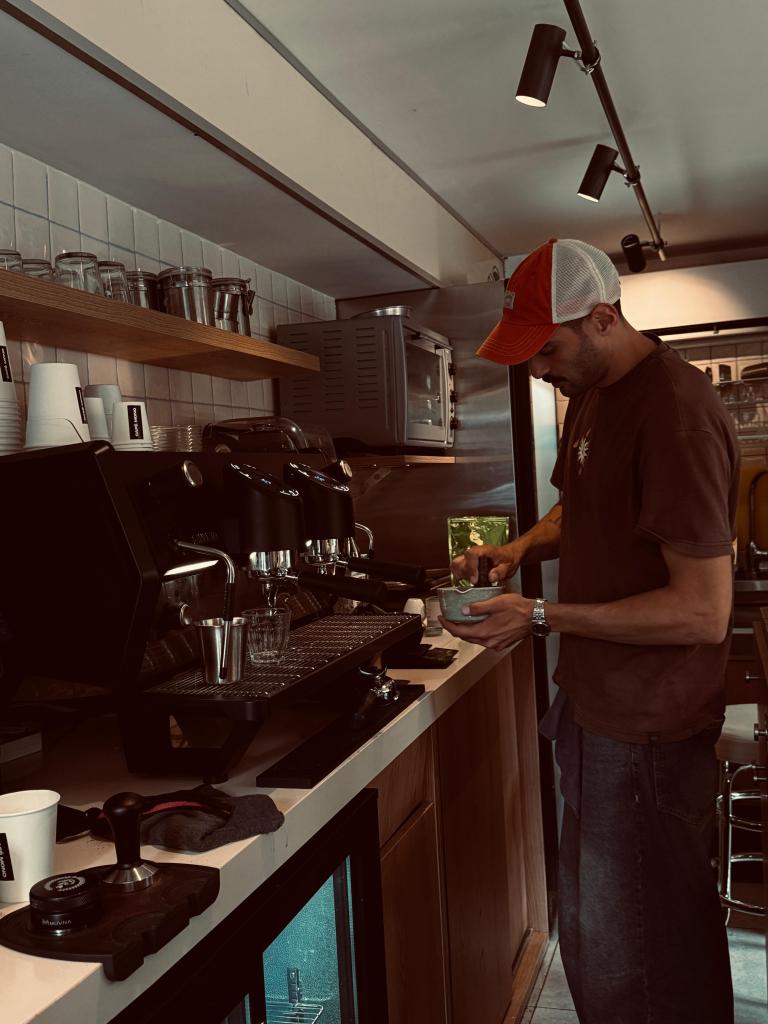
The Moment Café Mono Became Real
The dream did not arrive with a dramatic turning point. It grew slowly.
Through years of experience, Jaafar kept imagining what it would feel like to build something that reflected his own approach to hospitality. Then he found a small space that felt right.
Sometimes that is all it takes.
Not the perfect moment. Not a huge investment. Not an elaborate concept. Just the feeling that the time has finally come to stop imagining and start building.
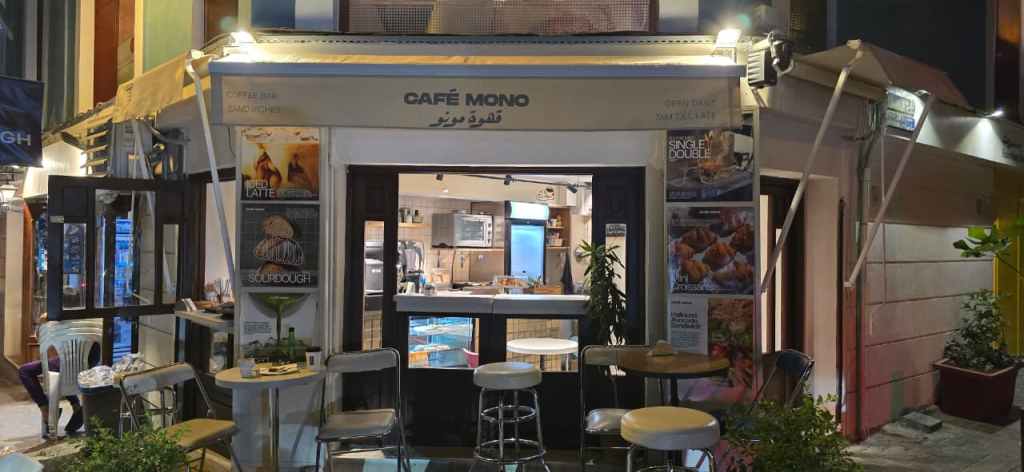
That is how Café Mono came to life.
The café began with familiar coffee favourites, cappuccino, flat white, cortado, the kind of drinks people know and come back to. But Jaafar did not want coffee to stand alone.
He placed particular attention on the sandwich selection, giving the food its own importance within the café rather than treating it as an extra.
The result is a concept that feels simple on the surface, but carries years of experience underneath it.
A Small Café With a Long Story
Café Mono may be a small space, but its story is anything but small.
It carries traces of Jaafar’s father.
Of restaurant visits when he was younger.
Of a first job in a kitchen.
Of years spent learning service and management.
Of long stretches of time spent thinking about what his own place might one day look like.
By the time Café Mono opened, Jaafar had already been building it in his head for years. That is perhaps the most interesting thing about places like this. The story does not begin when the doors open.
It begins much earlier — in the experiences, decisions, doubts, and ambitions that eventually lead someone to put their name, their energy, and their reputation behind a place of their own.
For Jaafar, Café Mono is not simply the café he opened.
It is the place where nearly 15 years of experience finally found a home. And sometimes, that is what gives a small place its biggest story
Swanky Tip
The best cafés often grow from experience, not trends. A clear idea, years of learning, and knowing what you want to serve can matter more than trying to do everything at once.

