
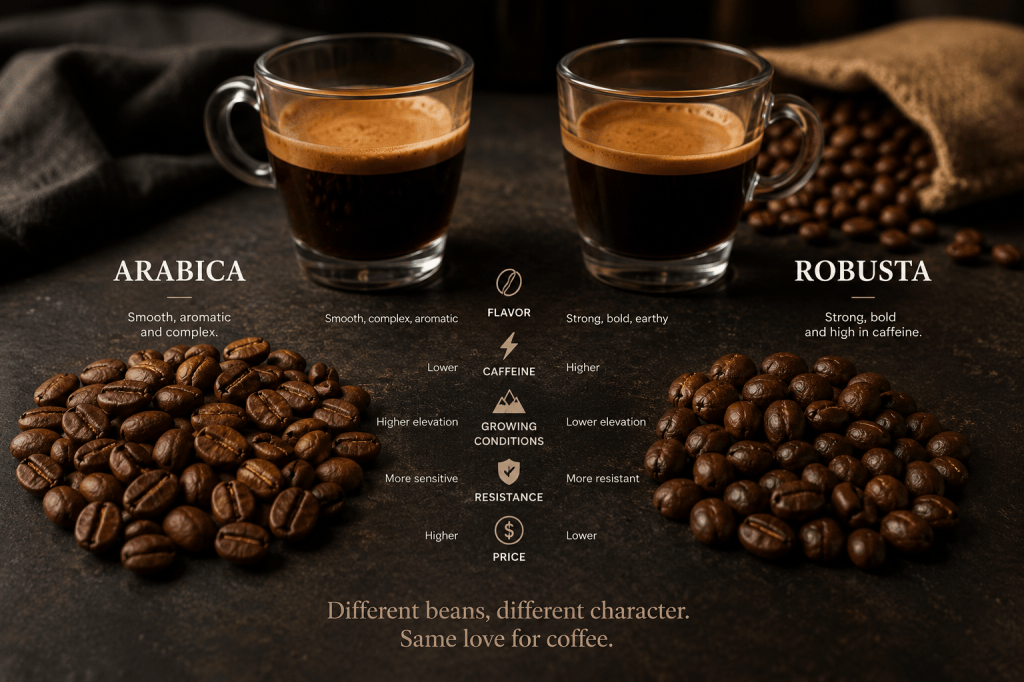
Arabica and Robusta dominate the world of coffee, but they’re far from identical. From flavor and caffeine to growing conditions and price, understanding the difference can help you know what you’re actually drinking — and which bean better suits your taste.
1. What Are Arabica and Robusta?
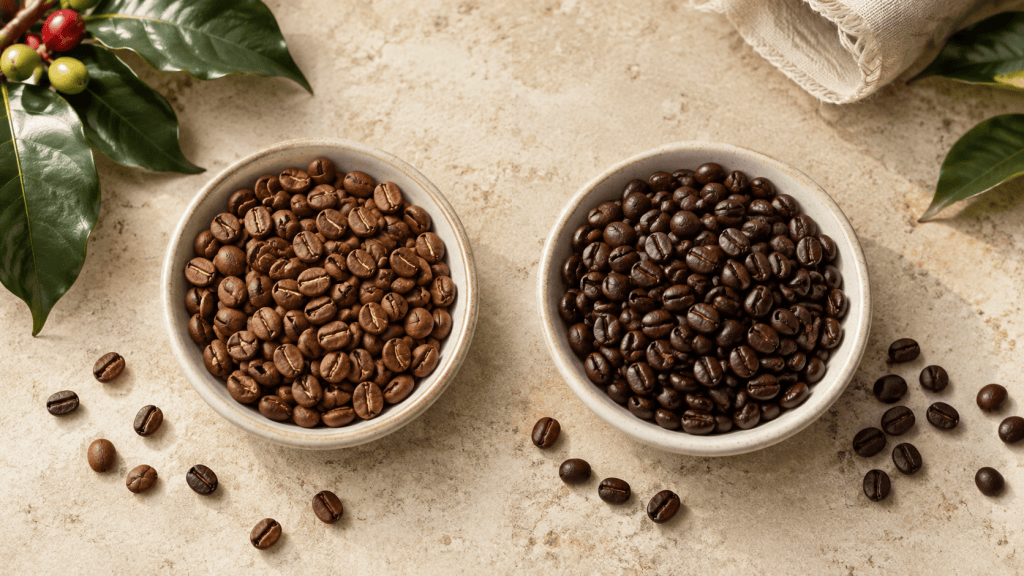
Arabica and Robusta are two different species of coffee plant.
Arabica (Coffea arabica) is generally associated with more delicate and complex flavors, while Robusta (Coffea canephora) tends to produce stronger, more intense coffee.
Together, they account for the vast majority of coffee produced around the world.
2. The Flavor Difference
Arabica is usually smoother and more aromatic, with flavors that can range from chocolate and caramel to fruit, berries, citrus, and florals.
Robusta tends to have a heavier, more bitter profile, often with earthy, woody, nutty, or dark-chocolate notes.
That doesn’t mean Arabica is automatically “good” and Robusta is “bad.” Quality depends heavily on how the coffee is grown, processed, roasted, and brewed.
3. Caffeine
One of the biggest differences is caffeine.
Robusta generally contains significantly more caffeine than Arabica.
That extra caffeine contributes to Robusta’s stronger bitterness and also acts as a natural defense mechanism for the coffee plant against insects and pests.
So if you’re looking for a stronger caffeine hit, Robusta often has the advantage.
4. Growing Conditions
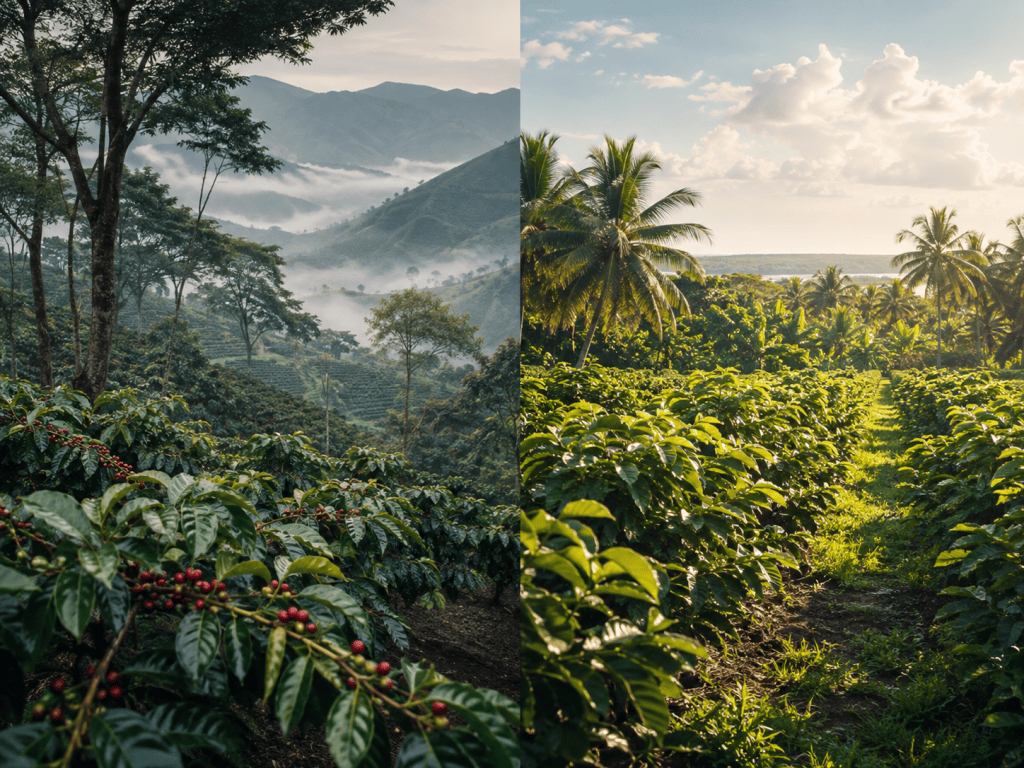
Arabica typically grows best at higher elevations with cooler temperatures.
It can be more sensitive to disease, pests, and climate conditions, making it more difficult and expensive to cultivate.
Robusta thrives at lower elevations and warmer temperatures and is generally more resistant to disease and environmental stress.
This makes Robusta easier and often cheaper to produce.
5. How the Beans Look
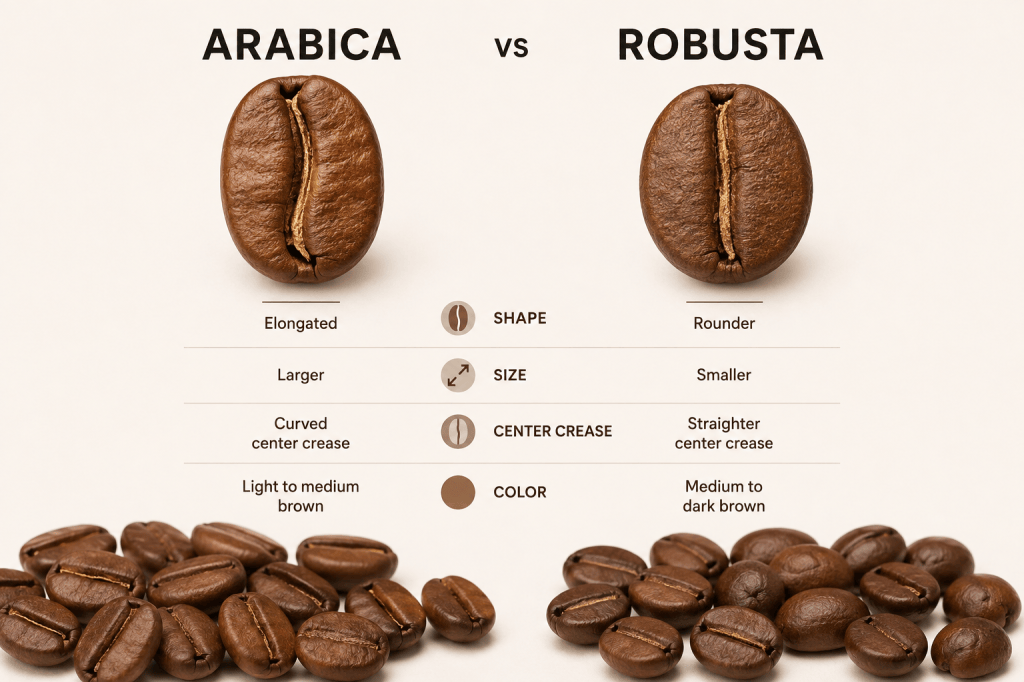
There are even visual differences.
Arabica beans tend to be:
- Longer and more oval
- Flatter in shape
- Characterized by a curved center crease
Robusta beans are generally:
- Smaller
- Rounder
- Characterized by a straighter center crease
It’s a subtle detail, but once you know what to look for, the difference becomes easier to spot.
6. Which One Is Used for Espresso?
Both.
Many specialty coffee shops use 100% Arabica, particularly when showcasing lighter or more complex flavor profiles.
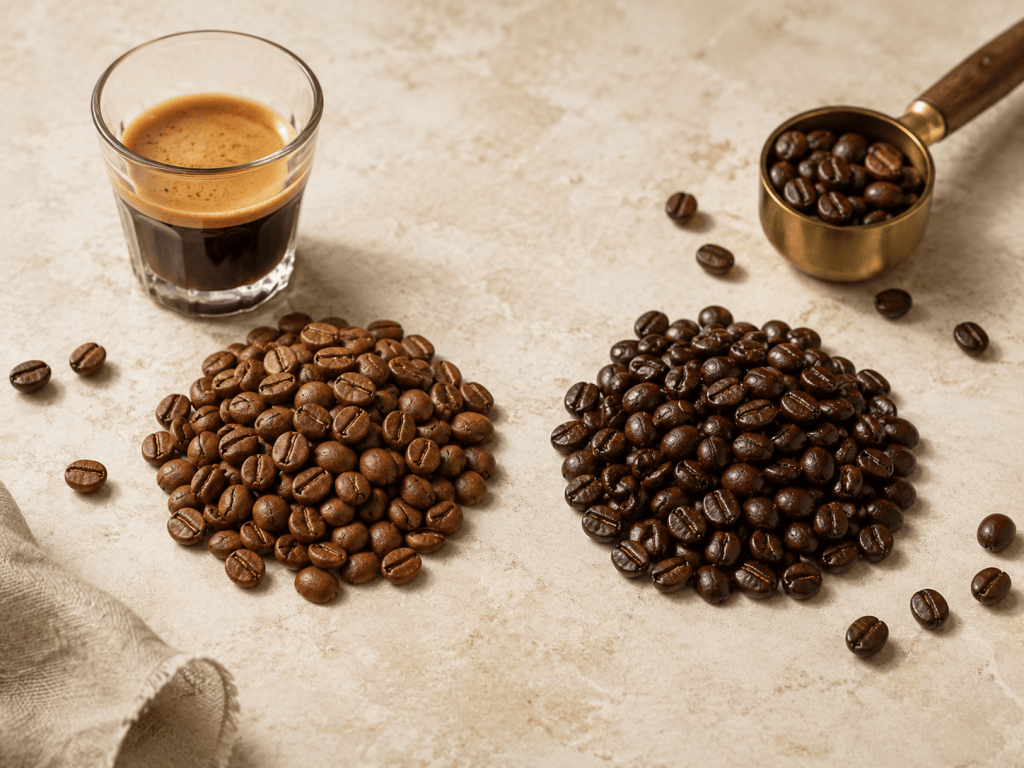
But traditional espresso blends sometimes include Robusta because it can add:
- More body
- Stronger flavor
- Additional caffeine
- A thicker crema
The right blend depends on the style of espresso the roaster wants to create.
7. Which One Should You Choose?
Choose Arabica if you prefer coffee that is smoother, sweeter, more aromatic, or more complex.
Choose Robusta if you enjoy coffee that is stronger, heavier, more bitter, and higher in caffeine.
And don’t be afraid of blends — combining the two can produce a cup with the aroma of Arabica and the body and intensity of Robusta.
SWANKY TIP
Don’t judge coffee only by the word “Arabica” on the package. Species is just one part of quality. Origin, freshness, roast level, processing method, and brewing technique can have an even bigger impact on what ends up in your cup.
 SwankySip