
Espresso looks simple: finely ground coffee, hot water, and a small cup. But behind every balanced shot is a precise combination of grind size, dose, pressure, temperature, and timing. Here’s what actually happens from bean to cup.
1. It Starts With the Coffee
A good espresso starts with freshly roasted coffee beans. The beans are ground very finely just before brewing because espresso relies on a short, high-pressure extraction. Grind too coarse and the water passes through too quickly; grind too fine and the shot can become slow, harsh, and over-extracted.
2. Measuring the Dose
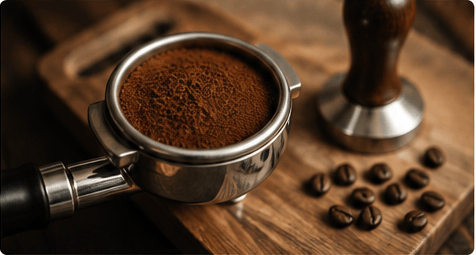
The ground coffee is placed inside the portafilter basket. A typical double espresso uses around 18–20 grams of coffee, although the exact amount depends on the basket, coffee, and recipe.
Consistency matters. Small changes in dose can noticeably change how the espresso tastes.
3. Tamping
The coffee grounds are distributed evenly and compressed with a tamper.
The goal isn’t simply to press as hard as possible. A level, even coffee bed helps water travel through the grounds uniformly and reduces the chance of channeling — when water finds an easier path through one section of the coffee.
4. The Extraction
The portafilter is locked into the espresso machine and hot water is pushed through the coffee under pressure.
Traditional espresso machines typically brew at around 9 bars of pressure.
A common starting point is roughly:
18 g coffee → 36 g espresso → around 25–30 seconds
But these numbers are guidelines rather than rigid rules. Different coffees often need different recipes.
5. What Is Crema?
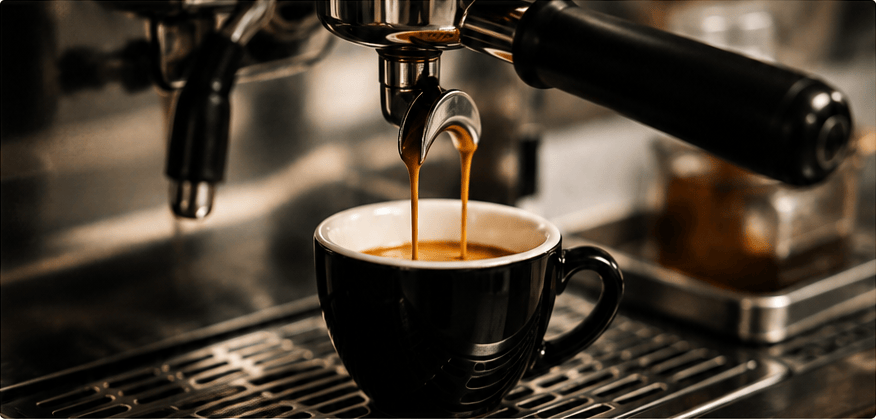
That golden-brown layer sitting on top of an espresso is called crema.
It forms when pressure releases gases trapped inside freshly roasted coffee while oils and tiny particles become emulsified during extraction.
Crema can look beautiful, but thick crema alone doesn’t automatically mean the espresso tastes good.
6. The Final Shot
A well-prepared espresso should feel concentrated and balanced rather than simply bitter.
Depending on the coffee, you might taste chocolate, caramel, nuts, berries, citrus, florals, or many other flavors.
The barista adjusts grind size, dose, yield, and extraction time until those flavors come together.
SWANKY TIP
If your espresso runs extremely fast, try grinding finer. If it takes too long and tastes overly bitter or dry, try grinding slightly coarser. Small adjustments can completely change the cup.
 SwankySip