The surprisingly interesting story behind Tall, Grande and Venti.

You walk into Starbucks wanting a large coffee.
Simple enough.
Except at Starbucks, “large” suddenly becomes Venti. A medium is Grande. And somehow the smallest regular option is called Tall.
Wait… what?
Why does ordering coffee suddenly feel like a tiny Italian language lesson?
The answer goes back more than 40 years — to a trip to Milan, a fascination with Italian espresso bars, and what eventually became one of the most recognizable pieces of coffee branding in the world.
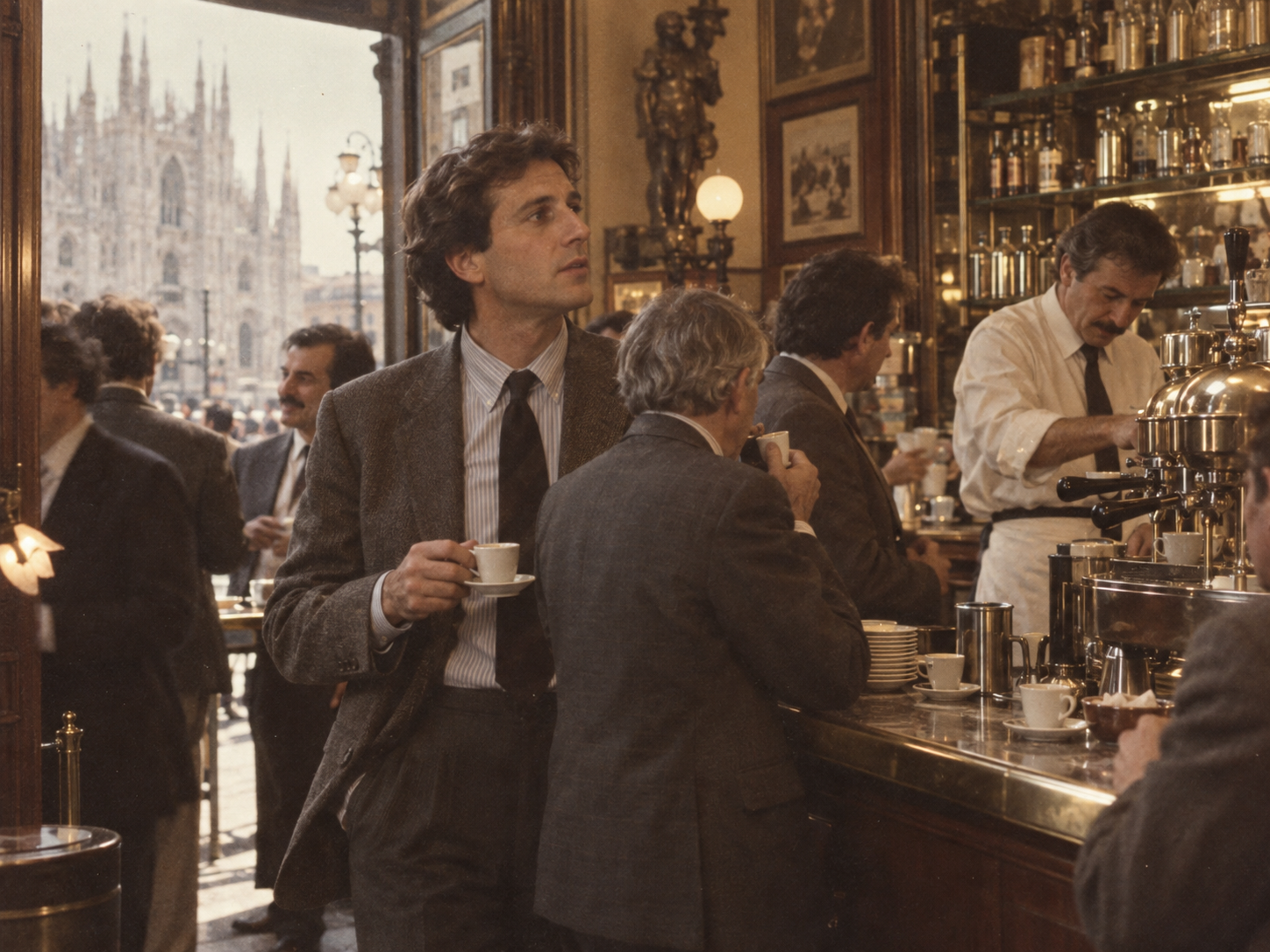
It All Starts in Milan
In 1983, Howard Schultz, who had joined Starbucks the previous year, traveled to Italy.
While in Milan, he became fascinated by something that went beyond the coffee itself.
Italian espresso bars weren’t simply places where people bought caffeine. They were social spaces — places where people stopped for an espresso, spoke with the barista, met friends and became part of a daily ritual.
Schultz returned to Seattle inspired by what he had seen and wanted to bring some of that coffeehouse culture to America. Starbucks itself describes his Milan experience as the inspiration behind the coffeehouse direction the company later took.
And with that Italian inspiration came something else:
the language of the café.
Espresso.
Macchiato.
Latte.
Grande.
And eventually…
Venti.
So What Does “Venti” Actually Mean?
Here comes the part that makes the whole thing much easier to understand.
Venti means “twenty” in Italian.
The name referred to the 20-fluid-ounce hot cup.
So instead of saying:
“I’ll have a large latte.”
Starbucks created an ordering experience where you’d say:
“I’ll have a Venti latte.”
That one word helped make ordering at Starbucks feel different from ordering coffee almost anywhere else.
And Venti isn’t the only name with an Italian connection.

Grande means large in Italian.
Later Starbucks introduced Trenta, from the Italian word for thirty, for some larger cold beverages.
But then we arrive at the weird one.
Why Is “Tall” the Small?
This is where Starbucks sizing gets wonderfully confusing.
The naming system wasn’t created all at once.
Earlier menus used sizes including:
Short → Tall → Grande
Short was the smaller cup. Tall was bigger. And Grande was the largest of the three.
That actually makes considerably more sense.
Then Starbucks began offering larger drinks and eventually introduced Venti. As the lineup changed, Short largely disappeared from the main menu — although an 8-ounce Short remains available for certain hot drinks.
That left Tall sitting at the bottom of the regular menu.
So a word that sounds like it should describe something big became Starbucks’ everyday “small.” Historical reporting dates the Short–Tall–Grande system to the mid-1980s, with Venti arriving later as Starbucks expanded its drink sizes.
Basically:
| Starbucks Think of it as |
|---|
| Short | Extra Small |
| Tall | Small |
| Grande | Medium |
| Venti | Large |
| Trenta | Extra Large / selected cold drinks |
And yes:
Grande literally means “large,” despite functioning as the middle size today.
Coffee logic. ☕

From Confusing to Familiar
There’s another clever thing happening here.
The first time someone walks into Starbucks, the menu might feel slightly unfamiliar.
Which one is medium again?
But once you learn it, you’re suddenly part of the system.
“Grande” stops meaning an Italian word.
It simply means your usual Starbucks size.
That familiarity can help create ritual and coffee businesses are built around rituals.
Your morning order.
Your preferred milk.
Your favorite drink.
Your size.
Your vocabulary.
Starbucks has also leaned heavily into personalization over the years, including making names written on cups a standardized part of its customer experience in 2012.
The drink becomes more than:
coffee + milk + cup.
It becomes:
“my Grande oat latte.”

Are These Actually Italian Coffee Sizes?
Not really.
Walk into a traditional café in Rome or Milan and don’t expect to find Italians ordering Tall, Grande and Venti drinks the way customers do at Starbucks.
The terminology is Italian-inspired, rather than a traditional Italian sizing system.
In fact, Short and Tall are English words.
Grande is Italian.
Venti is Italian.
So Starbucks essentially took inspiration from Italian café culture and developed its own vocabulary around it.
That’s an important distinction.
Starbucks didn’t copy the Italian coffee shop.
It interpreted it.

The Coffee Is One Thing. The Ritual Is Another.
And maybe that’s the most interesting lesson behind Venti.
Brands aren’t only remembered for what they sell.
They’re remembered for the little rituals surrounding what they sell.
Nike has the swoosh.
Apple has the bitten apple.
And Starbucks somehow managed to make us remember the Italian word for twenty because we wanted a bigger coffee.
Not bad for a cup size.
So the next time someone asks:
“Why can’t Starbucks just call it large?”
You know the answer.
Because “large” describes a size.
“Venti” feels like Starbucks.
SwankySip Note
Coffee culture isn’t only about what’s inside the cup. It’s also about the stories, rituals, language and people that developed around it.
And sometimes even the name printed on the cup has a story worth telling.
 SwankySip